

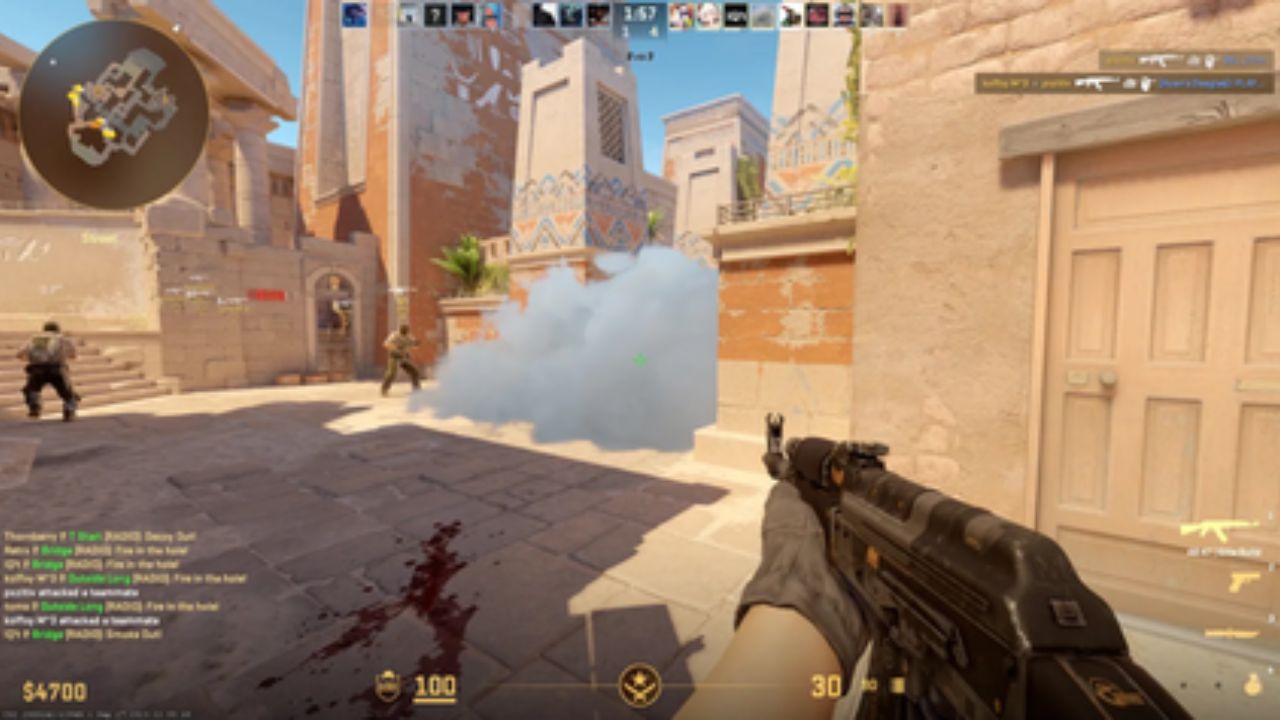

Counter-Strike 2 matches often appear balanced on paper. Both teams may have similar Premier ratings or comparable Elo averages.
Yet many games still feel completely one-sided from the opening rounds. This perception does not always mean the ranking system failed.
Instead, it reflects how CS2 rewards momentum, coordination, and adaptability over simple mechanical skill.
Even evenly rated teams can experience dramatic swings because performance varies round by round, and small early advantages compound quickly.
Understanding why this happens requires looking beyond visible ranks to examine psychology, the economy, and teamwork.
Small strategic differences, timing errors, and communication gaps can escalate rapidly in a tactical shooter where every round carries weight.
Skill Variability and Ranking Gaps
An equal average rating does not guarantee equal impact inside a live match. CS2 performance can fluctuate significantly from game to game.
One player might deliver precise aim and confident decision-making one day, then struggle with timing and positioning the next.
When several players on one side underperform simultaneously, the match can spiral rapidly. Short matches amplify these swings, leaving little room to stabilize.
Inconsistent Individual Performance
Mechanical skill is only part of performance. Confidence, reaction speed, and focus vary daily. A player rated at 15k may temporarily perform far above or below that level.
External factors such as fatigue, distractions, or inconsistent warm-up routines also influence outcomes.
If one team has two players overperforming while the other has two underperforming, the balance shifts immediately.
Even though averages remain equal, real-time output does not. This gap often creates early round streaks that feel overwhelming.
Over several rounds, confidence compounds for one side and declines for the other.
Hidden MMR and Carry Imbalance
Visible ratings also do not always reflect hidden matchmaking values. Some players may have higher internal ratings due to recent wins, inactivity resets, or limited placement matches.
In addition, a team composed of two strong “carry” players and three weaker teammates can still average out equally against five steady performers.
If those carry players dominate early duels, they can dictate pace and control space. They may secure opening picks, control key bombsites, and influence rotations consistently.
The scoreboard then exaggerates the difference, reinforcing the feeling of imbalance. Over time, that visible dominance shapes how both teams approach future rounds.
The Economy and Momentum Loop
CS2’s round-based economy magnifies small early leads. Winning the pistol round provides immediate financial control.
Securing the following anti-eco round further strengthens that advantage. Within just a few minutes, one side may hold superior rifles and utility while the other is forced into low-buy or full eco situations.
This economic gap often dictates how aggressively each team can play.
Snowball Effect in MR12
The MR12 format shortens the path to victory. With fewer total rounds available, early streaks matter more than in previous versions of the game.
A team that reaches a 4-0 or 5-0 lead quickly pressures the opponent’s economy and morale. Frequent forced buys can drain resources without producing results.
Even if the trailing side regains composure later, the limited round pool reduces comeback opportunities.
The scoreboard can look decisive long before the match is truly out of reach. Momentum becomes both financial and psychological.
Psychological Pressure and Tilt
Momentum also affects communication and decision-making. Repeated losses often lead to frustration, rushed pushes, or silence in voice chat.
Players may abandon structured defaults and attempt risky solo plays. Hesitation can also creep in, causing slower rotations and missed opportunities.
Meanwhile, the leading team gains confidence and executes strategies more cleanly. Clear communication reinforces strong setups and efficient trades.
This psychological contrast can widen the gap between two otherwise similar squads. Once morale declines, equal skill becomes harder to demonstrate effectively.
Team Coordination Versus Raw Aim

An individual’s aim does not consistently win structured matches. CS2 rewards information sharing, utility usage, and coordinated trades.
A team that plays as a unit can defeat mechanically stronger opponents who operate as five separate individuals.
This difference is especially visible in ranked environments where communication levels vary widely.
Utility and Trading Efficiency
Effective use of smokes, flashes, and Molotovs can neutralize superior aim. Well-timed utility denies vision and forces defenders into uncomfortable positions.
Teams that trade kills efficiently maintain numerical balance even after losing opening duels. Coordinated spacing ensures that refrags happen instantly rather than seconds later.
By contrast, uncoordinated players often peek alone and give away advantages. Over several rounds, this structured approach compounds into what appears to be dominance.
Small tactical edges accumulate into decisive scorelines.
Premade Teams Versus Solo Queue
Premade five-player squads typically have defined roles and consistent communication. They understand each other’s tendencies and react quickly to information.
Solo-queue teams of equal rating may lack this cohesion. Without shared strategies or clear leadership, executives become disorganized.
Utility may overlap inefficiently, and rotations may arrive too late. When coordination gaps persist across multiple rounds, the match can feel heavily tilted despite equal visible skill levels.
In many cases, perceived imbalance reflects structure rather than rating disparity.